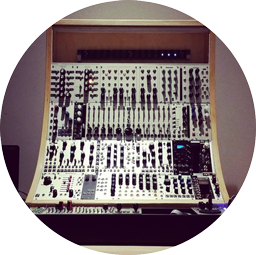
Gets the Herzog treatment.
“God’s Truth is Life”
Christian Wiman’s prose is ecstatic:
The two living novelists whose work means most to me are Cormac McCarthy, particularly in Blood Meridian, and Marilynne Robinson. Both of these writers seem to me to have not only the linguistic and metaphorical capacities of great poets, but also genuine visionary feeling. My own predispositions have everything to do with my preference, of course: I believe in visionary feeling and experience, and in the capacity of art to realize those things. I also believe that this is a higher achievement than art that merely concerns itself with the world that is right in front of us. Thus I don’t respond as deeply to a poet like William Carlos Williams as I do to T.S. Eliot, and I much prefer Wallace Stevens (the earlier work) to, say, Elizabeth Bishop. (To read his “Sunday Morning” as it apparently asks to be read, to take its statements about reality and transcendence at face value, is to misread—to under-read—that poem. Its massive organ music and formal grandeur are not simply aiming at transcendence, they are claiming it.) Successful visionary art is a rare thing, and a steady diet of it will leave one not simply blunted to its effects but also craving art that’s deeply attached to this world and nothing else. This latter category includes most of the art in existence (even much art that seems to be religious), and it is from this latter category that most of our aesthetic experience will inevitably come.
…
Encroaching environmental disaster and the relentless wars around the world have had a paralyzing, sterilizing effect on much American poetry. It is less the magnitude of the crises than our apparent immunity to them, this death on which we all thrive, that is spinning our best energies into esoteric language games, or complacent retreats into nostalgias of form or subject matter, or shrill denunciations of a culture whose privileges we are not ready to renounce—or, more accurately, do not even know how to renounce. There is some fury of clarity, some galvanizing combination of hope and lament, that is much needed now, but aside from some notable exceptions of older poets (Adrienne Rich, Eleanor Wilner) it sometimes seems that we—and I use the plural seriously, I don’t exempt myself—are anxiously waiting for the devastation to reach our very streets, as it one day will, it most certainly will.
I knew this would come.
I get Berkeley nostalgia every time I leave. Even if only for a short while. From Wikipedia (brainchildvn on flickr):

I miss neoclassical architecture.
—
… Just noticed the username of the guy who took this photo. A picture of UCB, from a guy named “brain child”? A little arrogant, no?
“It’s natural enough…
to question the validity of daylight from the stupor of dreamy night…”
I stopped to consider a version of mortality. Would the act of annihilating myself amount to murder or suicide, would it be wrong or noble? Ethan switched backed to await my decision. He was poker-faced about it, and I realized that our affection would never be greater than this, that it was based in binary code and cathode ray tubes, and that our version of compassion was best understood in those terms, in that space. My time with Ethan was an affair, and it would end as affairs ended. I would look back on a pleasure initially so complete that it would seem virtual in remembrance, an impossible fiction. We had arrived for this instant at an identical plane of concern and desire, but we had descended to that spot from opposite poles, and soon enough we would be yanked bank to separate realities like puppets on puppet strings.
(“Ethan, A Love Story” – by J.C. Hallman)
Both obsessed…
And perplexed by this video.
Love the Moog solo at the end.